Connect the Dots · November 1, 2026 · 4 min read
Why small prompts beat one giant prompt
One enormous prompt feels efficient. A loop of small ones works better. Here's why, with an example.
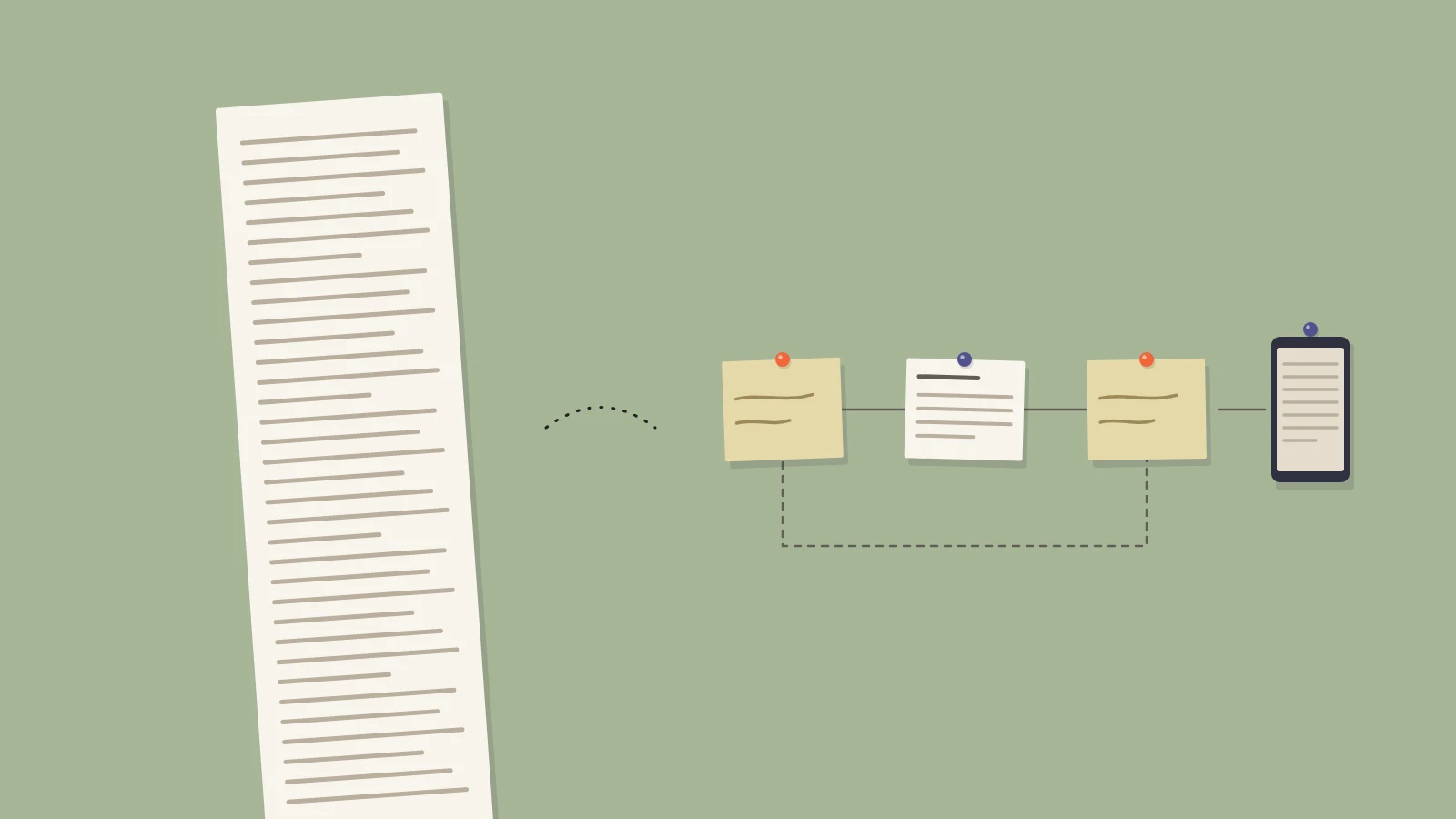
When people first build something with AI, they often write one enormous prompt: every feature, every screen, every detail, all at once. It feels efficient. It usually isn't.
Every gap becomes a guess
An AI model fills anything you didn't say with a guess. A giant prompt has more gaps, so it gets more guesses. And when ten things come back at once, it's hard to tell which one went wrong.
Small loops work better
The habit that works is a loop: ask for one small thing, look at what you got, fix one thing, then ask for the next. In lesson 3.3 we call it the test loop: ask, look, fix, repeat.
- You see problems early. If one screen is wrong, you catch it before five more are built on top of it.
- Fixes stay small. One change at a time means you know what each change did.
- You can go back. Save a version each time something works, so a bad change is easy to undo.
What a small prompt looks like
Instead of "Build me a full invoicing app with clients, invoices, reminders and payments," try "Build one page that fills in a polite payment reminder from a client's name, an amount and a due date." Get that working. Then ask for the next piece.
A good small prompt still says who it's for, what it does and how it looks. Small means one job, described clearly.
Most good answers take a few tries
Expect two or three follow-ups for anything that matters. That's normal, and it's how the work gets good.