Connect the Dots · November 1, 2026 · 4 min read
Why every lesson ends with a check you have to pass
Eight questions, six to pass, before the next lesson opens. It can feel strict for a free course. Here's the thinking behind it.
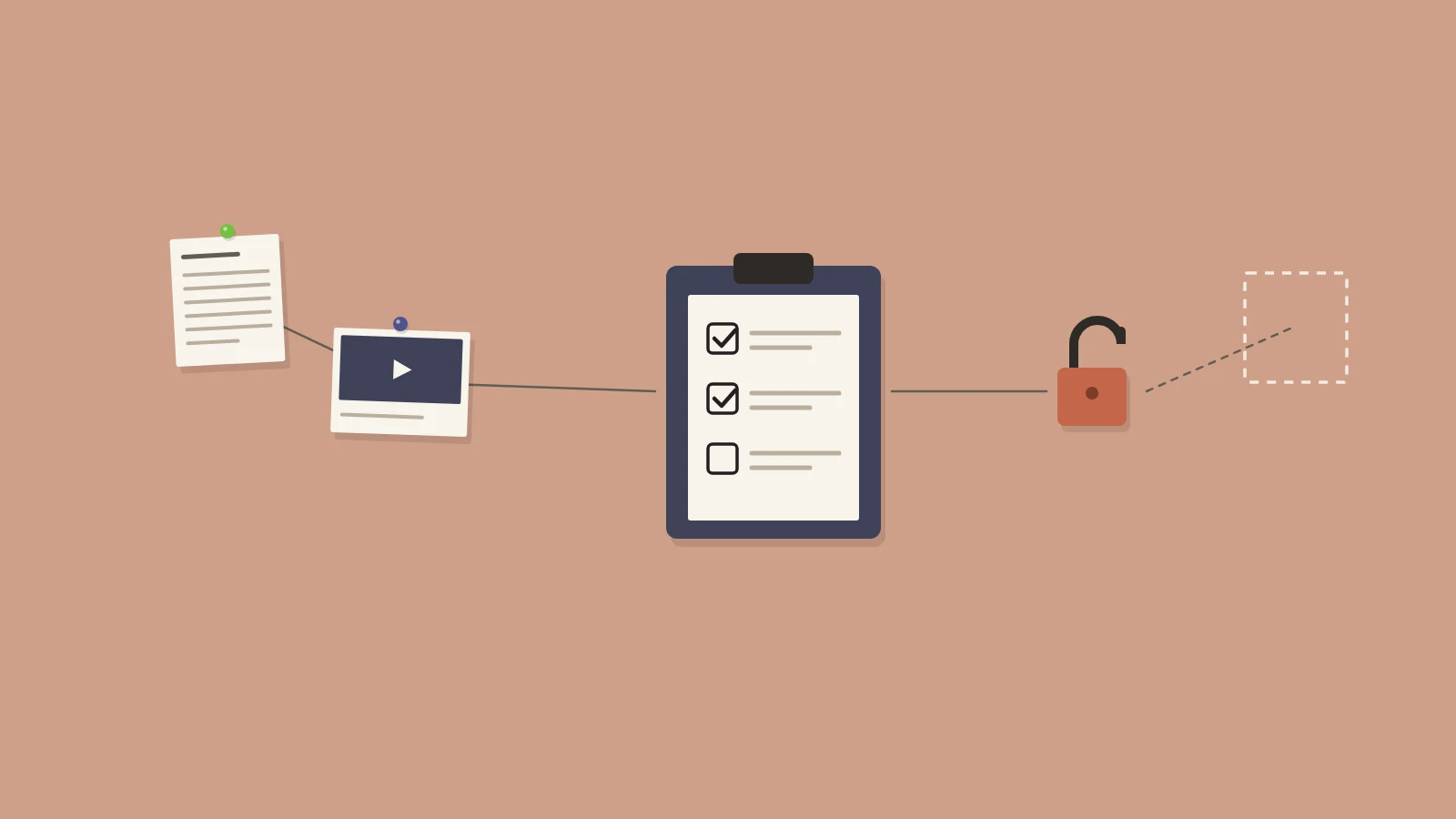
Every DotSkills lesson ends with a short check. You answer eight questions, and you need six right to open the next lesson. Some people find that strict for a free course. Here's why we do it.
Trying to remember is how you remember
Reading something again feels like learning. Trying to recall it without looking does more. Learning researchers have studied this for decades and call it retrieval practice: people who test themselves tend to remember more later than people who only reread.
The wrong answers are real mistakes
Each wrong option is a mistake beginners actually make: a common belief, a shortcut that sounds sensible, or the right idea at the wrong time. If you skimmed, they look tempting. If you understood, you can rule them out. So passing means something.
A miss sends you to the right place
When you miss a question, the check explains the right answer and links you to the exact station or page that teaches it. That spot gets a red dot in the lesson, so you know what to review. Then you retake the check.
Retakes are different
Each lesson has a pool of more than twenty questions, and every attempt draws a fresh set of eight. You can't pass by remembering where the answers were. You pass by understanding the idea.
Why it opens the next lesson
Lessons build on each other, in the order the map shows. If one piece is shaky, the next one has nothing to stand on. The check makes sure the ground is solid before you move on.
After the check comes Your turn: one small, real task, so the idea gets used as well as remembered.